10 Forgotten Truths to Help You Get Through Hard Times
WRITTEN by
WRITTEN by
 Swami Mukundananda was at the Massachusetts Institute of Technology (MIT) on October 12th, 2011 to deliver an enlightening talk on the topic of “Technology for Mind Management”. The lecture was followed by Q/A session.
He brings alive ancient truths and wisdom from the Vedic scriptures; synthesizing them with modern thought and scientific theories. His logic, wit, humor, and profound message have brought a sense of clarity and purpose to countless souls.
A video well worth watching.

 Enabling others to act is one of the five principles of leadership called out by Jim Kouses and Barry Posner in their book, The Leadership Challenge. One aspect of enabling others to act is knowing how to delegate, but it is much more and is deeply intertwined with the other four principles: Creating an inspired vision, Modeling the way, Challenging the Process and encouraging the heart.
So what does Enabling others to act mean beyond simple delegation? First, let’s spend a few minutes on the art of delegation. How many times have you sat at the top of an organization and not wanted to turn loose of a task because it seems it would be easier and quicker to yourself; or the team is already working so hard and you don’t want to burden them; or you don’t trust that it will be done exactly how you want it done; or it’s something you really enjoy doing and so you do it yourself even though there are more pressing matters at hand; or you have no clue how to do the task and you don’t want to embarrass yourself by asking for help. I could go in, but you get the point.
No one is perfect… At times I try and shield my people from a messy task and not to overload them. Sometimes these tasks belong on my desk and so I’m on track for not delegating. On the other hand, what have I done if I do not delegate something that should rightfully be delegated? First, I have shortchanged the organization and possibly put the company in jeopardy by spending time on the task rather than keeping my eye on the bigger picture such as focusing on the organization’s strategy and direction. Second, and more importantly, I have robbed someone from the opportunity to learn by doing or shine by doing.
What are some of the other aspects of enabling others to act? For most this may be a blinding glimpse of the obvious… Ask yourself, do my people have the right equipment, materials, organization structure, training and development, atmosphere and culture within which to work, are they safe both physically and emotionally… can they relate to, and have they bought into, the company vision, and can they step out with new ideas and raise issues without fear. There are many more questions along these lines, and so much more that can be said.
Suffice it to say, enabling others to act is worth any good person’s time to reflect upon as it relates to how they lead their team.

 Marines who have paid the ultimate price by giving their lives for fellow Marines and the mission have best exemplified the “sacrificial mode” of Servant Leadership. It is embedded within the context of the core values of the Marine Corp’s rich heritage of personal sacrifice.
“The servant leader is first a person who has a natural desire to serve, not necessarily to lead. This model is also considered under the general school of leader and follower theories, but does not require established position or authority. This leader has a demonstrated record of selflessness, preservation of organizational goals, and concern for people within the organization. Although the leader may display qualities of other models, they are clearly willing to forego personal concerns, career concerns and even concern for their own life in preference of accomplishing the mission and taking care of people.” (Greenleaf, 1991) – United States Marine Corps Lejeune Leadership Institute – Leadership Models
 Ever been “Pizzled”??? This video lecture is fascinating and informing.
“Psychologist Daniel Goleman shot to fame with his groundbreaking bestseller Emotional Intelligence. The premise of the book, now widely accepted, is that raw intelligence alone is not a sure predictor of success in life. A greater role is played by ‘softer’ skills such as self-control, self-motivation, empathy and good interpersonal relationships.
Now Goleman comes to Intelligence Squared for an exclusive talk on the themes of his latest book, Focus: The Hidden Driver of Excellence. Attention, he will argue, is an underrated asset for high achievers in any field. Incorporating findings from neuroscience, Goleman will show why we need three kinds of focus: inner, for self-awareness; other, for the empathy that builds effective relationships; and outer, for understanding the larger systems in which organisations operate. Those who excel rely on Smart Practices such as mindfulness meditation, focused preparation and positive emotions that help improve habits, add new skills, and sustain excellence.”
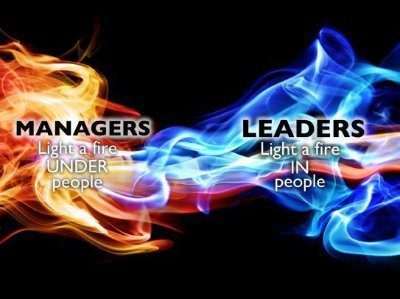
 Whether in uniform, suit or jeans these practices stand the test of time, and yes, a spiritual male can be on top at work.
Leadership is not about personality; it’s about behavior—an observable set of skills and abilities. The “Leadership Challenge” by Jim Kouze and Bary Posner has been a favorite of mine throughout my 39 year career spanning the USMC, Corporate hi-tech, start-ups and small established businesses.
The Leadership Challenge addresses 5 leadership practices:
1) Modeling the way,
2) Inspire a shared vision,
3) Challenge the process,
4) Enable others to act,
5) Encourage the heart.

Believe it or not, Servant Leadership is a concept that is as old as time, and is one often misunderstood and thought of as an oxymoron in a parochial sense. The term “servant” is generally defined as a person who performs duties for others, especially a person employed in a house on domestic duties or as a personal attendant. Whereas, when we traditionally think about leadership we might think of the man leading his men over the wall in the midst of battle; Audie Murphy, John Wayne, Chesty Puller(for the Marines reading this), etc… As well we are inspired by great men such as Gandhi, Mandela and Lincoln.
So how is it that these two terms find themselves combined and what does it mean to me? First, to draw on my time in the Marine Corps, ingrained in us from they first day is, “take care of your men.” How we take care of our men varies in many ways. Sometimes it comes in the form of annealing them for battle, going through ordeals of personal survival and hardship; or instilling the sense of duty and honor where men embrace the Bible verse, “Greater love hath no man than this, that a man lay down his life for his friend.”
In other ways we see examples where the leader sees that his men are fed first, have the best supply chain of food and equipment, and is the one who places himself in harms way before exposing his men to danger. We see him exercising love and compassion for another human being, and knows and exercises the essence of the Golden Rule. It is in these ways that we recognize the traits of a servant leader; a man who serves his men so they can be, or become, the best they can become so that when on the front lines, whether in business or battle, they are ready, willing and able to accomplish the mission at hand.
Servant leadership is no different in business. It can be said that Southwest Airlines is in a life and death business that parallels the armed services. If someone does not do their job, people die. One of their mantras is, “If you take care of your people they will take care of the customer, and the customer will take care of the profits.” Again, it begins with taking care of your people.
I do not believe servant leadership is an oxymoron. In fact, the essence of what true leadership embodies “is” servant leadership.
 Who am I? Why am I here? Does it matter? And if it matters, what is the mark I intend to leave behind?
Over 2,000 cave paintings dating back some 30,000 years cover the walls of Chauvet-Pont-d’Arc Cave in Southern France. Today, we study and wonder about their origin and what message they were intended to communicate. At the same time, they may leave us to wonder about our own origin and what it is we intend to communicate across our lifetime, and what mark it is we intend to leave behind; our legacy. –
“Legacies transcend the boundaries of time and have no limits. They stand tall in the face of trial. They prevail. They’re found in risk that cling to the promise of hope and extend beyond the limited hours of your life, and mine… They leave trails filled with reflective ideals, and are roads left for those who will follow.” – Paraphrased from the video short, Leave Your Legacy.
Chauvet-Pont-d’Arc Cave (video)

“A man should learn to detect and watch that gleam of light which flashes across his mind from within, more than the lustre of the firmament of bards and sages. Yet he dismisses without notice his thought, because it is his. In every work of genius we recognize our own rejected thoughts: they come back to us with a certain alienated majesty.”
Emerson “Self Reliance”
Self-Reliance is an essay written by American transcendentalist philosopher and essayist Ralph Waldo Emerson. It contains the most thorough statement of one of Emerson’s recurrent themes, the need for each individual to avoid conformity and false consistency, and follow his or her own instincts and ideas. It is the source of one of Emerson’s most famous quotations: “A foolish consistency is the hobgoblin of little minds, adored by little statesmen and philosophers and divines.”
Summary and analysis of the essay: Self Reliance
Empathy vs Sympathy – Berne Brown
More on Empathy
I Invite you to “Like” us and “follow us” on Facebook, and join the conversation in our Facebook Group.